Or maybe even if you have.
Let’s start with a disclaimer that I’ll probably end up adding to each of these blogs, just to be the safe side. It should be obvious, but just in case it’s not, I do not claim to be some sort of ultimate authority on the country of Switzerland or the people who live there. I do, however, have deep genealogical and cultural roots to the country through my mother, and have been there many times, so I feel that I do have the right to speak about the country, its people, and its rituals and customs as I have experienced them and understand them. I hope that the ideas and observations I write about here might be of help to someone who wants to learn more about the place and what it’s like to live there, or at the very least, be entertained by my commentary. This piece, I would say, is primarily directed toward an American audience, people who also grew up in the country I’ve lived in for the past 23 years, but maybe others would find it relevant too, I don’t know.
Anyway, let’s get to it. Here are the five things I think you should know about Switzerland if you’ve never been, regardless of whether you plan to visit someday or not. It’s not travel advice so much as clearing up some of the common misunderstandings, misconceptions, and myths I’ve had come up in my conversations with other Americans. Even if you know most of these already, I hope you can find it useful, interesting, or entertaining, in some way, shape or form. So here we go, with the number one thing I think you should know.
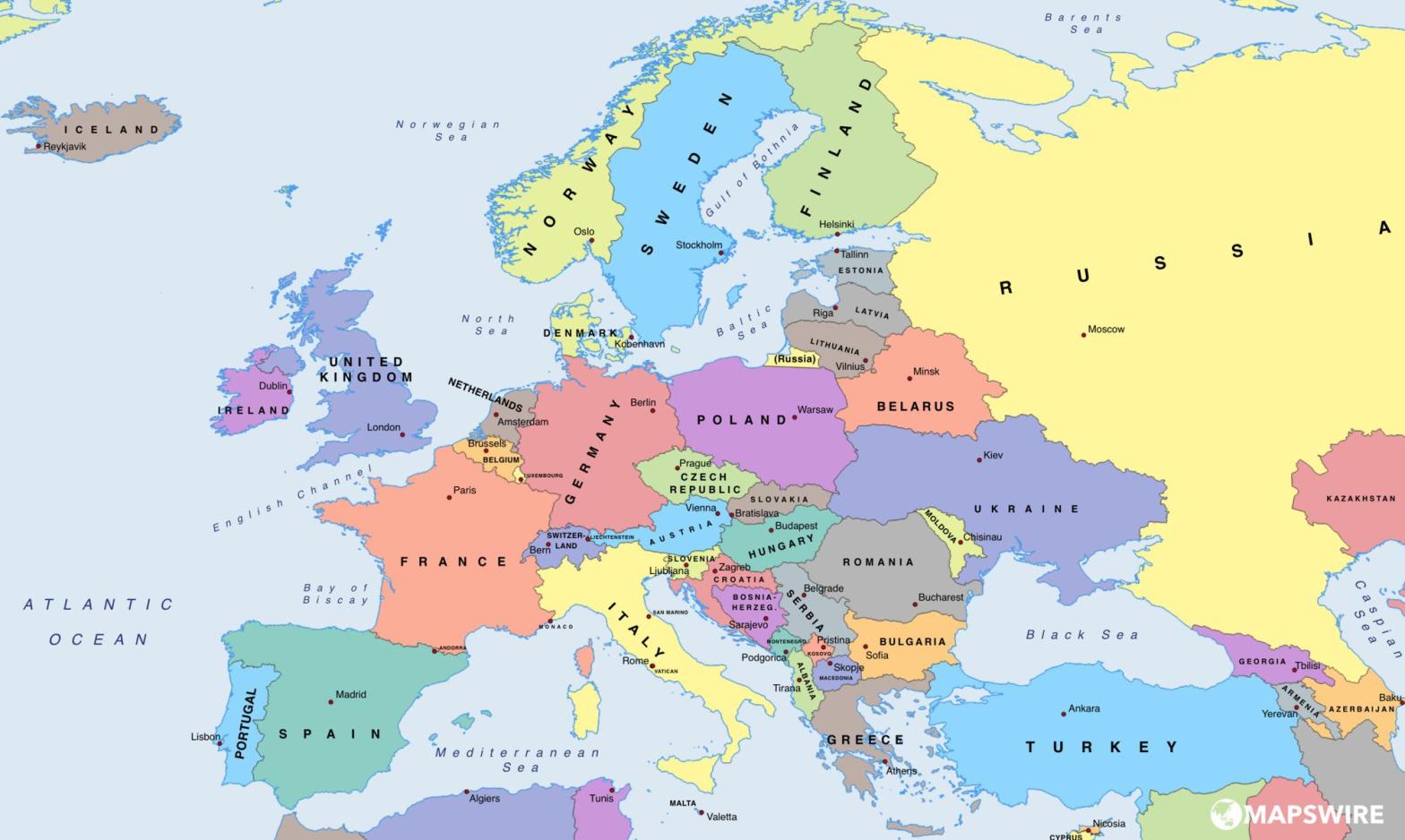
It’s not Sweden. To many, this might seem almost dumbfoundingly obvious, but if I had a dollar for every time someone said: “so your mom is from Sweden, right?” I’d have, well, I’m not sure exactly, but definitely more dollars than you probably think. To be clear, it’s an easy mistake to make, and not one that offends me or that I want to shame anyone about. Switzerland and Sweden. They’re both countries in Europe, they both start with the same two first letters, and unless we’re close friends, I really don’t expect you to remember where my mom is from. What concerns me more, and the real reason I want to touch on this, is the slightly less common but still disturbingly prevalent follow-up comment I hear when I correct people, which tends to go a little something like “Okay, but they’re pretty similar/pretty much the same, right?”
First, let me start with this. Europe is not a monolith. Just like any continent, or even any region of a continent, is not a monolith. America is not a monolith, the U.S. is not a monolith, so comparing Sweden and Switzerland and suggesting that the two are pretty much the same is to me, a little like saying to an American, “Connecticut and Virginia. They’re pretty much the same, right?” I mean, I guess they’re in the same general region of the continent if we’re being broad, and not that far from one another, and probably share some cultural similarities. But no, they are not the same.
And if you’re talking to a native, in either circumstance, those differences that they do have are pretty important, as I’m sure they’ll tell you. At least in the case of Connecticut and Virginia, the two are bonded by the same national government and majority language, which can’t be said of Switzerland and Sweden. Moreover, not only do Swedish speak Swedish and the Swiss speak, well, lots of things (I’ll get more into that later) the two countries also have vast geographical, cultural, and political differences.
For example, for some reason, people tend to group Switzerland in with the rest of those socialist Nordic countries like Sweden, Finland, Norway, and Denmark, despite the fact that their political and economic systems actually function quite differently. You won’t, for example, find universal healthcare in Switzerland, as you would in Sweden, although both countries share high rankings in terms of the health, well-being, and general quality of life experienced by the majority of its citizens.
Sweden is also much larger than Switzerland in terms of area (almost ten times as large), and is much farther north (quite far, actually, at least by European standards). Sweden also possesses a fairly long coastline, whereas Switzerland is land-locked. I could go on and on, but the point is, Switzerland and Sweden are both beautiful countries well worth visiting. But no, they are not even close to being the same.
The answer to the question “What language do they speak there?” is a little complicated. A small country surrounded by four well-known European countries (Germany to the north, France to the West, Austria to the east, and Italy to the south) Switzerland is actually a fairly diverse country — at least culturally and linguistically — and thus, has 4 official languages (German, French, Italian, and Romansch, an endangered fairly unknown minority language only spoken in Switzerland). Depending on which region of the country you’re in, you’ll most likely hear much more of one than the other, but official governmental documentation and signage will often feature all four languages. For example, if you’re anywhere in the northern half of the country, particularly near Germany and Austria, your best bet for communicating with the locals is German — written or spoken — but where it gets even trickier is that even though those growing up in the region are taught to read, write, and speak in Standard (often also called “high” German), you won’t catch most of them speaking it at home or with friends and family, or most likely, most other native Swiss. In these situations, they’ll speak one of the many dialects of “Swiss-German” or “Schweizer-Deutsch,” a form of the language that, while bearing many similarities to the German most are more commonly familiar with, is also different enough to be mostly unintelligible to those unaccustomed to hearing the dialects. So if you overhear a Swiss speaking in something that sounds almost like German, but it seems just a little off or not quite right, it could be Swiss-German. Verschtahsch?!
Some of the stereotypes run true, at least when it comes to behavior and personal habits. I’m painting with a broad brush, of course, but if you’ve heard about the country’s reputation for cleanliness, politeness, efficiency, or timeliness, I’m here to report that in most places and with most people, that reputation holds up. And if you want to fit in, you’ll adopt their practices and customs too, like showing up on time (if not early), cleaning up after yourself, and generally not disturbing the peace. These are little things most of us already strive to do, but trust me when I tell you, the Swiss take them more seriously than anyone else I’ve met.
Majority of the population does not live an idyllic agrarian lifestyle herding goats in the Alps, milking cows, yodeling, and making cheese and cuckoo clocks. I can’t really fault people for this misconception considering this is how Switzerland has been portrayed in so many movies, tourism campaigns, and other media. But, I nonetheless have to report that Heidi may have steered you a little bit wrong. Yes, some people still farm and raise livestock, and yes, some people live in the alpine regions of the country (working in various industries), but even they don’t run around dirndls and lederhosen on a regular basis as you’ve probably imagined (which is more of an Austrian thing, anyway).
Though the country does have some of the most beautiful mountain views and natural areas to be found on this planet (though I’m a little biased), it’s also a modern, largely urban and surprisingly industrial one too. It’s also probably a lot less mountainous than you think. The country is made up of not only high mountain peaks, but also many lakes, rolling hills, and vast valleys — which is where most of the population actually live and work on a daily basis. They go to work as scientists, teachers, nurses, social workers, and cashiers, and for lunch, they might even have a hamburger at McDonald’s or coffee at Starbucks, just like you do. It’s also probably less cold and snowy than you think, unless, again, you’re high up on a mountain. If you still want to experience that serene, slightly old-fashioned, alpine fantasy you had in mind, there are still places you can do that, but just know that what you’re experiencing is the exception, not the rule.
Most people aren’t rich. Yes, Switzerland is home to more millionaires than any other country, so maybe the stereotype is somewhat reasonable, but you still won’t find the majority of the population (about 88 percent) living in mansions or flying in private jets (or rolling in piles of money, Scrooge McDuck style).
I’ll never forget the conversation I had with a former professor about the possibility of my moving to Switzerland about a year ago now where I think I mistakenly suggested that I or someone I know is one of these mythic Swiss millionaires by stating that a family friend I might stay with had a “large house.” Really, I was just thinking (and speaking) in Swiss terms, where any home with more than probably 2 (or 3 bedrooms max!) is considered a “large house” (it’s a small country, so regardless of if you have the money or not, it’s not easy to build big). Ultimately though, what’s important to know is that even though the country as a whole experiences a generally high quality of life and also possesses a large middle class (I would classify most of the people I know over there in this group), it’s also not without those who struggle financially from time to time, and most people you see on the street certainly don’t fall within the “rich” category. So don’t expect your Swiss friend to pick up your tab at the bar just because of their country of origin (though they might anyway because they’re generous like that).
There they are. The top five things I think you should know. I could probably ramble on for several more paragraphs if I gave myself permission, but for now, I’ll limit it to a nice 5. Americans, let me know what things you already knew, and which ones surprised you, or if you’ve spent time in Switzerland, let me know if there’s anything you think I should have included or got wrong.
 Eine Amerikanerin in der Schweiz